Learning Slovak as a second language is a long-term process that requires regular contact with the language. Unlike a mother tongue, Slovak as a second language is not acquired automatically, but consciously and gradually. This is why it is essential to work with the Slovak language systematically throughout the entire school year.
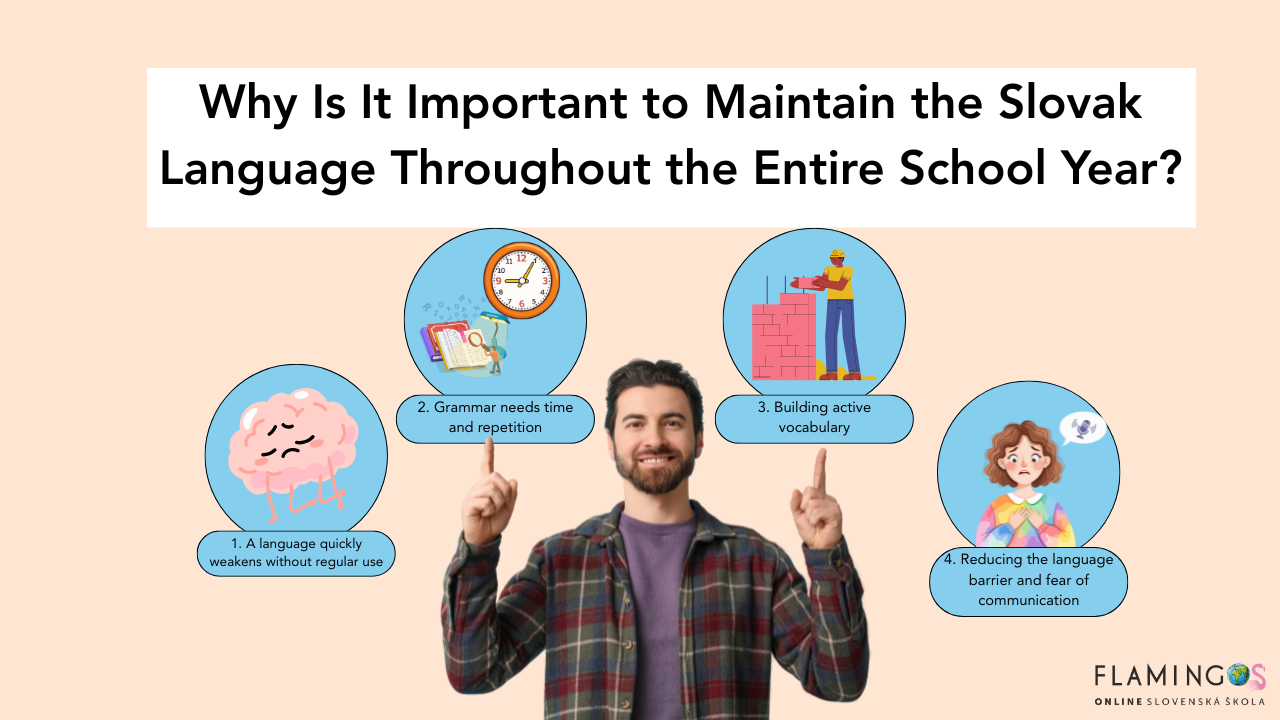
1. Slovak language quickly weakens without regular use
If students do not use Slovak regularly, they quickly lose confidence in their vocabulary and grammar. Breaks in instruction or more extended periods without contact with the language can lead to forgetting and a return to simpler, often incorrect structures.
2. Slovak grammar needs time and repetition
Slovak grammar is challenging for learners, especially the system of cases, verb conjugation, and agreement. A one-time explanation is not enough. Ongoing revision and the use of grammar in different contexts throughout the year help students better understand the rules and gradually automate them.
3. Building an active vocabulary
Understanding words is not sufficient – learners need to be able to use them actively. Regular exposure to Slovak during the school year allows repeated encounters with the exact words in different situations, which is essential for remembering and using them correctly.
4. Reducing the language barrier and fear of communication
When learning a foreign language, it is natural for students to be afraid to speak. Regular and supportive language practice throughout the school year helps reduce stress, builds confidence, and encourages students to communicate, even when they make mistakes.
Conclusion
Learning Slovak as a second language requires time, space, and consistent contact with the language. Continuous work throughout the school year helps learners gradually build confidence, better understand what they hear and read, and participate more actively in communication. The language then becomes not a source of stress, but a tool that helps them understand their surroundings, build relationships, and function naturally in everyday life. Sign up for a free trial lesson.